Summary

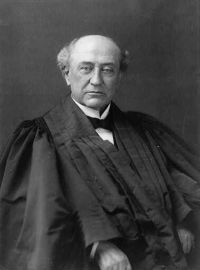
Portrait of David Josiah Brewer David Josiah Brewer Moran v. Horsky — Opinion of the Court

Now, if the government, seeking, in order to discharge its duty to the defendant, to avoid so much of the patent as included this mining claim, is bound by the ordinary rules of equity in respect to laches, etc., a fortiori is it true that when he is the party to the litigation the same equitable rules are binding on him. The government cannot, when acting for him, avail itself of those principles of law which are designed simply for its own protection, and no more can he, in his own litigation, shelter himself behind those principles.
Source: Wikisource

Portrait of David Josiah Brewer David Josiah Brewer Moran v. Horsky — Opinion of the Court

Indeed, if the matter of laches can be recognized at all, it is difficult, independently of the question of jurisdiction, to perceive any error in the ruling of the state supreme court. One who, having an inchoate right to property, abandons it for fourteen years, permits others to acquire apparent title, and deal with it as theirs, and as though he had no right, does not appeal to the favorable consideration of a court of equity.
Source: Wikisource

Portrait of David Josiah Brewer David Josiah Brewer Moran v. Horsky — Opinion of the Court

If a patent should issue for land in the state of Massachusetts, where the government never had any, it would be absolutely void. If it should issue for land once owned by the government, but long before sold and conveyed by patent to another who held possession, it might be held void in a court of law on the production of the senior patent. But such is not the case before us. Here the question is whether this land had been withdrawn from the control of the land department by certain acts of other persons, which include it within the limits of an incorporated town.
Source: Wikisource

Get perspective with Kwize: daily news enlightened by great literature