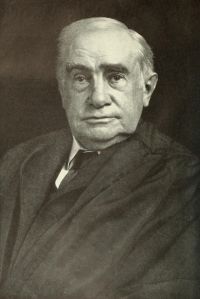
 Henry Billings Brown,
Schrimpscher v. Stockton — Opinion of the Court
Henry Billings Brown,
Schrimpscher v. Stockton — Opinion of the Court
“ But although the treaty of 1855 and the patent to Rodgers had expressly provided that there should be no alienation by the grantee or his heirs, the treaty of 1868, which took effect after his death, removed all restrictions upon alienations which should thereafter be made, either by the incompetent grantee Rodgers or his heirs, who thereafter held an alienable title, and were bound to assert such title within the time specified by the statute of limitations, although no title could be gained by adverse possession so long as the land continued to be inalienable by Rodgers and his heirs. ”
