Summary

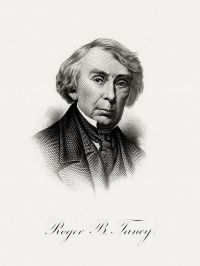
Portrait of Roger B. Taney Roger B. Taney Henderson v. Tennessee — Opinion of the Court

Do not the treaties protect a possessory right held under them equally with the rights in fee simple? Is a defendant in a possessory action bound to show that he is tenant in fee? Shall a defendant in a possessory action, against whom the plaintiff has obtained an erroneous judgment, be barred of a writ of error, because on the trial he did not deduce to himself a title in fee?
Source: Wikisource

Portrait of Roger B. Taney Roger B. Taney Henderson v. Tennessee — Opinion of the Court

The argument on the other side would lead us to the conclusion that it is the duty of this court 'ampliare jurisdictionem.' We maintain precisely the reverse; and in this case especially, that the mere fact of the defendants below setting up an outstanding title, out of themselves, without a claim in themselves under the treaty, cannot confer jurisdiction. The true construction of the statute is, that the persons intended to be benefited must have a direct interest under the statute or treaty, and specially set up that interest in the state court.
Source: Wikisource

Portrait of Roger B. Taney Roger B. Taney Henderson v. Tennessee — Opinion of the Court

The next step to a good and perfect title is the right of possession. 3d. The mere right of property, jus proprietatis, without either possession or even the right of possession, where the estate of the owner is divested and 'put to a right.' 4th. A complete title, 'jus duplicatum,' or 'droit droit,' where there is 'juris et seisinae conjunctio.' As the action of ejectment is a possessory action, founded on a right to the possession, and can be maintained by a right to the possession even for a term of years, so it can be defended by one having the actual possession.
Source: Wikisource

Get perspective with Kwize: daily news enlightened by great literature