Summary

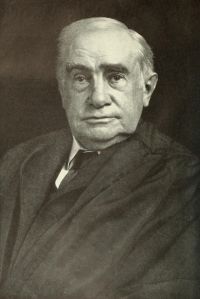
Portrait of Henry Billings Brown Henry Billings Brown United States v. Loughrey — Opinion of the Court

We know of no principle of law under which it can be said that timber which was the property of the state when cut becomes the property of the United States by an act of congress resuming title to the land from which it was cut, although the timber may in the meantime have been removed hundreds of miles from the lands, and passed into the hands of one who knew nothing of the source from which it was derived.
Source: Wikisource

Portrait of Henry Billings Brown Henry Billings Brown United States v. Loughrey — Opinion of the Court

So, where a landowner intrusts another with the possession of his lands, either by lease, by contract to sell, or otherwise, the right of action for trespasses committed during such tenancy belongs to the latter, and, except under special circumstances, an action for a trespass, such as the cutting of timber, will not lie in favor of the landlord.
Source: Wikisource

Portrait of Henry Billings Brown Henry Billings Brown United States v. Loughrey — Opinion of the Court

It was held that he had a right to enter and enjoy the land for agricultural purposes, but that he had no right to cut timber for any other purpose than for the cultivation, improvement, and enjoyment of the land as a farm, and that the owner of the inheritance, who had never parted with his title, might maintain an action of trover for it against any one in possession, although a bona fide purchaser under the occupant.
Source: Wikisource

Get perspective with Kwize: daily news enlightened by great literature