Summary

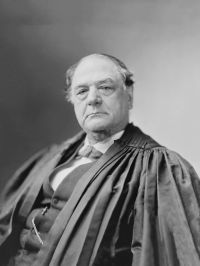
Portrait of Noah Haynes Swayne Noah Haynes Swayne Merryman v. Bourne — Opinion of the Court

In California a judgment in ejectment has the same conclusiveness as a judgment in any common law action, and in determining its effect the same principles are applied which control the result of the like inquiry in other cases. A defeated plaintiff may bring a new action upon an after-acquired title with the same effect as a stranger in whom such title might have been vested, and the former judgment will no more bar one than the other. [1]
It appears by the finding of facts that F. A. Woodworth did bring a new action against a part of those in possession.
Source: Wikisource

Portrait of Noah Haynes Swayne Noah Haynes Swayne Merryman v. Bourne — Opinion of the Court

Doubts are to be resolved in favor of the judgment rather than against it. But if the parties were the tenants of Fulton, the fact would not avail the plaintiff in error. The principle sought to be applied is subject to several well-settled qualifications. It may be shown that the landlord's title has ceased by expiration or transfer. If the tenant be evicted, he may take a new lease from the party evicting him. It has been held, that if threatened with suit upon a paramount title, the threat, under such circumstances, is equivalent to eviction.
Source: Wikisource

Portrait of Noah Haynes Swayne Noah Haynes Swayne Merryman v. Bourne — Opinion of the Court

Before that time, the pueblo or village of San Francisco existed, and under the laws of the country was entitled to the territory within certain prescribed limits, known as pueblo lands. It had also an ayuntamiento or town council, and an alcalde. The alcalde was the chief executive officer of the pueblo, and, as such, had authority to make grants of the pueblo lands.
Source: Wikisource

Get perspective with Kwize: daily news enlightened by great literature