Summary

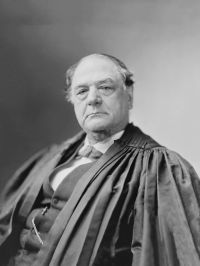
Portrait of Noah Haynes Swayne Noah Haynes Swayne Dickerson v. Colgrove — Opinion of the Court

The common law is reason dealing by the light of experience with human affairs. One of its merits is that it has the capacity to reach the ends of justice by the shortest paths.
The passage of a title by inurement and estoppel is its work without the help of legislation. We think no sound reason can be given why the same thing should not follow in cases of estoppel in pais where land is concerned.
Source: Wikisource

Portrait of Noah Haynes Swayne Noah Haynes Swayne Dickerson v. Colgrove — Opinion of the Court

Hoarde, 1 Burr. 119. 'Ejectment,' says he, 'is a possessory remedy, and only competent where the lessor of the plaintiff may enter, and every plaintiff in ejectment must show a right of possession as well as of property.' If the plaintiff in the present case was not entitled to possession, how, according to this authority, could he recover?
Source: Wikisource

Portrait of Noah Haynes Swayne Noah Haynes Swayne Dickerson v. Colgrove — Opinion of the Court

What improvements were made and how far the property had risen in value are not disclosed, nor does it appear what stimulated Chauncey to violate his promise and commence this attack on the defendants.
The estoppel here relied upon is known as an equitable estoppel, or estoppel in pais. The law upon the subject is well settled. The vital principle is that he who by his language or conduct leads another to do what he would not otherwise have done, shall not subject such person to loss or injury by disappointing the expectations upon which he acted.
Source: Wikisource

Get perspective with Kwize: daily news enlightened by great literature