Summary

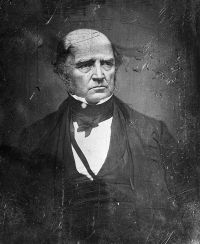
Portrait of Levi Woodbury Levi Woodbury Henderson v. Tennessee — Dissent

Here, too, the court below seemed to concede, that Henderson possessed such a right under Miller's heirs; but decided against him, on the ground that the right of Miller himself was defective.
Again, the question of right is not the guide, but the question of claim, and the claim being overruled. Nor need the claim be to the whole estate or interest. I such an action as this, the persons in possession may have, in themselves, no title in fee, nor for life, nor even for years. It is sufficient if a mere tenancy at will, for or in behalf of those possessing a larger estate, is claimed.
Source: Wikisource

Portrait of Levi Woodbury Levi Woodbury Henderson v. Tennessee — Dissent

And after he was expelled, Henderson, as another agent, seems not only to have regained the possession for the heirs, but to have held it by their title since, and probably as their agent or tenant, with like privity. The notice to Henderson, Likewise, to take on himself the defence in this case, and his admission by the court to defend, confirm this view. A third person, disconnected entirely with the title or right of possession, would not usually be admitted.
Source: Wikisource

Portrait of Levi Woodbury Levi Woodbury Henderson v. Tennessee — Dissent

What is drawn in question in any case depends on the facts and the law applicable to that particular case. Here the title of Miller's heirs under the treaty, I have already shown, was certainly drawn in question, and as certainly was overruled by the judge.
But it is argued, that the defendant must have had a right under the United States to make the defence, or we have no jurisdiction. That, however, is begging the question on the merits. It seems quite sufficient to have him set up such a right and to have it overruled.
Source: Wikisource

Get perspective with Kwize: daily news enlightened by great literature