Summary

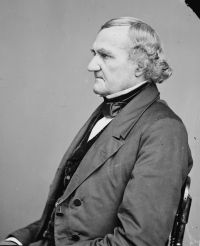
Portrait of John Catron John Catron,  Miller v. Austen — Opinion of the Court

“ The statute of that State declares all promissory notes, drawn for a sum certain, payable to any person or order, or to any person or his assigns, negotiable by indorsement.
The established doctrine is, that a promise to deliver, or to be accountable for, so much money, is a good bill or note. Here the sum is certain, and the promise direct. Every reason exists why the indorser of this paper should be held responsible to his indorsee, that can prevail in cases where the paper indorsed is in the ordinary form of a promissory note
”
Source: Wikisource

Portrait of John Catron John Catron,  Miller v. Austen — Opinion of the Court

“ We do not think it worth while to comment on the positions of the counsel for the plaintiffs in error, that the paper in question is not a promissory note, because subject to the condition of the return of the certificate; and that, if it is a note at all, it is a note to Hugh Short, and not to Henry Miller. The first is refuted by the remark of the court which suggested it, that it is a condition which is implied by law in every promissory note; and the second is refuted by the language of the instrument, and the act of the defendant himself. ”
Source: Wikisource

Portrait of John Catron John Catron,  Miller v. Austen — Opinion of the Court

“ We refer the court, also, to 1 Greenl. Rep. 535; 2 Cow. Rep. 536; 10 Wend. 675; and, in deciding the last of which cases, Nelson, J., said, 'the instrument is a promissory note within the statute, as it contains every quality essential to such paper. The acknowledgment of indebtedness on its face implies a promise to pay the plaintiffs,' and the payment, by its terms, was to be in money, absolutely. ”
Source: Wikisource

Get perspective with Kwize: daily news enlightened by great literature