Summary

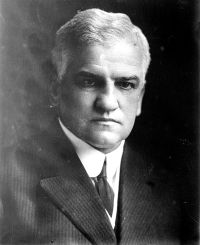
Portrait of John Hessin Clarke John Hessin Clarke Merchants' Loan Trust Company v…

The interesting and ingenious argument, which is earnestly pressed upon us, that this distinction is so fundamental and obvious that it must be assumed to be a part of the 'general understanding' of the meaning of the word 'income,' fails to convince us that a construction should be adopted which would, in a large measure, defeat the purpose of the amendment.
Source: Wikisource

Portrait of John Hessin Clarke John Hessin Clarke Merchants' Loan Trust Company v…

Thus, it is the plainly expressed purpose of the act of Congress to treat such a trustee as we have here as a 'taxable person' and for the purposes of the act to deal with the income received for others precisely as if the beneficiaries had received it in person.
There remains the question, strenuously argued, whether this gain in four years of over $700,000 on an investment of about $500,000 is 'income' within the meaning of the Sixteenth Amendment to the Constitution of the United States.
Source: Wikisource

Portrait of John Hessin Clarke John Hessin Clarke Merchants' Loan Trust Company v…

Harry W. Mager, Collector, etc., submitted with it, and in other cases since argued, that the word 'income' as used in the Sixteenth Amendment and in the Income Tax Act we are considering does not include the gain from capital realized by a single isolated sale of property, but that only the profits realized from sales by one engaged in buying and selling as a business-a merchant, a real estate agent, or broker-constitute income which may be taxed.
Source: Wikisource

Get perspective with Kwize: daily news enlightened by great literature