Summary

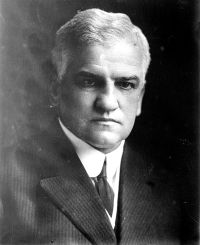
Portrait of John Hessin Clarke John Hessin Clarke United States Milwaukee Social Democratic Pub Company v…

He could not issue a general order that a certain newspaper should not be carried because he thought it likely or certain that it would contain treasonable or obscene talk. The United States may give up the postoffice when it sees fit, but while it carries it on the use of the mails is almost as much a part of free speech as the right to use our tongues and it would take very strong language to convince me that Congress ever intended to give such a practically despotic power to any one man.
Source: Wikisource

Portrait of John Hessin Clarke John Hessin Clarke United States Milwaukee Social Democratic Pub Company v…

It is important, because what we decide may determine in large measure whether in times of peace our press shall be free.
The denial to a newspaper of entry as second-class mail, or the revocation of an entry previously made, does not deny to the paper admission to the mail; nor does it deprive the publisher of any mail facility. It merely deprives him of the very low postal rates, called second-class, and compels him to pay postage for the same service at the rate called third-class, which was, until recently, from 8 to 15 times as high as the second-class rate.
Source: Wikisource

Portrait of John Hessin Clarke John Hessin Clarke United States Milwaukee Social Democratic Pub Company v…

Such is the legislation of Congress. It clearly appears that there was no express grant of power to the Postmaster General to deny second-class mail rates to future issues of a newspaper because in his opinion it had systematically violated the Espionage Act in the past, and it seems equally clear that there is no basis for the contention that such power is to be implied. In respect to newspapers mailed by a publisher at second-class rates there is clearly no occasion to imply this drastic power.
Source: Wikisource

Get perspective with Kwize: daily news enlightened by great literature