Summary

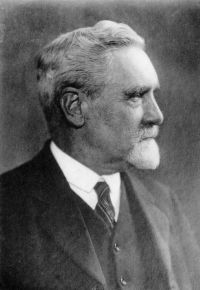
Portrait of John Holland Rose John Holland Rose 1911 Encyclopædia Britannica, Volume 24… (1911)

With Murat Savary made skilful use of the schisms in the Spanish royal family (March-April 1808) , and persuaded Charles IV., who had recently abdicated under duresse, and his son Ferdinand VII., the de facto king of Spain, to refer their claims to Napoleon. Savary induced Ferdinand to cross the Pyrenees and proceed to Bayonne—a step which cost him his crown and his liberty until 1814. In September 1808 Savary accompanied the emperor to the famous interview at Erfurt with the emperor Alexander. In 1809 he took part, but without distinction, in the campaign against Austria.
Source: Wikisource

Portrait of John Holland Rose John Holland Rose 1911 Encyclopædia Britannica, Volume 24… (1911)

In February 1805 he was raised to the rank of general of division. Shortly before the battle of Austerlitz (2nd of December 1805) he was sent by Napoleon with a message to the emperor Alexander I. with a request for an armistice, a device which caused that monarch all the more eagerly to strike the blow which brought disaster to the Russians. After the battle Savary again took a message to Alexander, which induced him to treat for an armistice. In the campaign of 1806 Savary showed signal daring in the pursuit of the Pxussians after the battle of Jena.
Source: Wikisource

Portrait of John Holland Rose John Holland Rose 1911 Encyclopædia Britannica, Volume 24… (1911)

He was among the last to desert the emperor at the time of his abdication (11th of April 1814) and among the first to welcome his return in 1815, when he became inspector-general of gendarmerie and a peer of France. After Waterloo he accompanied the emperor to Rochefort and sailed with him to Plymouth on H.M.S. “Bellerophon.” He was not allowed to accompany him to St Helena, but underwent several months' “internment” at Malta. Escaping thence, he proceeded to Smyrna, where he settled for a time.
Source: Wikisource

Get perspective with Kwize: daily news enlightened by great literature