Battle of Austerlitz

Definition and stakes

Karl von Stutterheim A Detailed Account of the Battle of Austerlitz (1807)

The imperfect accounts which have reached the public, as to the details of the Battle of Austerlitz, are so contradictory to each other, and so little satisfactory to military men, that it has been thought proper to lay the following relation before them, in order to fix their ideas as to this memorable epoch.
In all ages, as in all countries, nations and armies have been the slaves of opinion. Hence it has ever been the policy of governments to heighten, by those means best calculated to excite national enthusiasm, the splendour of even the greatest victories
Source: Gutenberg

A British officer The Powers of Europe and Fall of Sebastopol

Those who escaped being made prisoners succeeded before nightfall in reaching Austerlitz, already filled with [27] the wounded, the fugitives and the stragglers from every part of the army.
Thus terminated the battle of Austerlitz.
The loss of the allies was immense. Thirty thousand (30,000) men were killed, wounded, or made prisoners. Of the latter were 19,000 Russians, and 6,000 Austrians, most of whom were wounded. Almost the whole of their baggage fell into the hands of the victors.
Source: Gutenberg

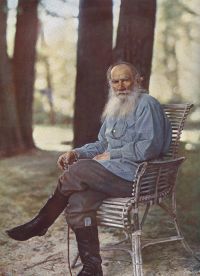
Portrait of Leo Tolstoy Leo Tolstoy War and Peace (1869)

Just as in a clock, the result of the complicated motion of innumerable wheels and pulleys is merely a slow and regular movement of the hands which show the time, so the result of all the complicated human activities of 160,000 Russians and French—all their passions, desires, remorse, humiliations, sufferings, outbursts of pride, fear, and enthusiasm—was only the loss of the battle of Austerlitz, the so-called battle of the three Emperors—that is to say, a slow movement of the hand on the dial of human history.
Source: Gutenberg

Get perspective with Kwize: daily news enlightened by great literature