Summary

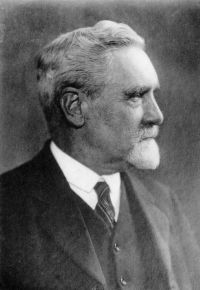
Portrait of John Holland Rose John Holland Rose 1911 Encyclopædia Britannica, Volume 4… (1911)

His excitable and volatile disposition agreed ill with the discipline of the place, and on the outbreak of the Revolution in 1789 he eagerly espoused the democratic and anti-clerical movement then sweeping over France. On returning to Corsica he became the leading speaker in the Jacobin club at Ajaccio. Pushing even Napoleon to more decided action, Lucien urged his brothers to break with Paoli, the leader of the more conservative party, which sought to ally itself with England as against the regicide republic of France.
Source: Wikisource

Portrait of John Holland Rose John Holland Rose 1911 Encyclopædia Britannica, Volume 4… (1911)

The Bourbon court retired to Sicily, where it had the protection of a British force. By the decree of the 30th of March 1806 Napoleon proclaimed Joseph king of Naples, but allowed him to keep intact his claims to the throne of France. In several letters he enjoined his brother to greater firmness in his administration: “These peoples in Italy, and in general all nations, if they do not find their masters, are disposed to rebellion and mutiny.”
Source: Wikisource

Portrait of John Holland Rose John Holland Rose 1911 Encyclopædia Britannica, Volume 4… (1911)

He soon rendered himself popular by his advanced democratic ideas, which he expressed on all possible occasions. After the French revolution of 1848 he was elected to the National Assembly as a representative of Corsica, and (his elder brother, Jerome Napoleon Charles, dying in 1847) assumed the name of Jerome. Notwithstanding his ostensible opposition to the coup d’état of 1851, he was designated, upon the establishment of the Empire, as successor to the throne if Napoleon III. should die childless, and received a liberal dotation, but was allowed no share in public affairs.
Source: Wikisource

Get perspective with Kwize: daily news enlightened by great literature