Summary

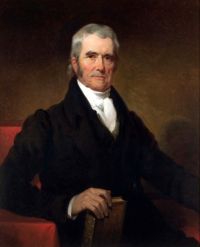
Portrait of John Marshall John Marshall Cathcart v. Robinson — Opinion of the Court

Had Mr Robinson induced Mr Cathcart to sign this agreement by suggesting that in point of law he might relieve himself from it by paying the penalty, a court of equity would not aid him in an attempt to avail himself of the imposition. The actual case is undoubtedly not of so strong a character. No untruth has been suggested; but if Mr Robinson knew that Mr Cathcart was mistaken, knew that he was entering into obligations much more onerous than he intended, that gentleman is not entirely exempt from the imputation of suppressing the truth.
Source: Wikisource

Portrait of John Marshall John Marshall Cathcart v. Robinson — Opinion of the Court

If to any unfairness a great inequality between price and value be added, a court of chancery will not afford its aid. 2 Coxe's Cases in Chancery, 77. In the case at bar this inequality is very considerable. This inequality gives importance to the mistake under which the purchaser executed the agreement; a mistake to which the vendor contributed, by consenting to reduce the penalty to the sum which the vendee said he could pay should circumstances make it his interest to absolve himself from the contract by its payment.
Source: Wikisource

Portrait of John Marshall John Marshall Cathcart v. Robinson — Opinion of the Court

The right of a vendor to come in to a court of equity to enforce a specific performance is unquestionable. Such subjects are within the settled and common jurisdiction of the court. It is equally well settled that if the jurisdiction attaches, the court will go on to do complete justice, although in its progress it may decree on a matter which was cognizable at law. Mr Robinson could not have sued for the penalty at law without abandoning his right to enforce the contract of sale.
Source: Wikisource

Get perspective with Kwize: daily news enlightened by great literature