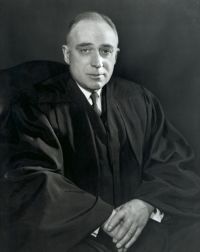
John Marshall Harlan II

John Marshall Harlan II

Summary

Portrait of John Marshall Harlan II John Marshall Harlan II California v. Green — Concurrence

What I would hold binding on the States as a matter of due process is what I also deem the correct meaning of the Sixth Amendment's Confrontation Clause-that a State may not in a criminal case use hearsay when the declarant is available. See West v. Louisiana, supra. [20] There is no reason in fairness why a State should not, as long as it retains a traditional adversarial trial, produce a witness and afford the accused an opportunity to cross-examine him when he can be made available.
Source: Wikisource

Portrait of John Marshall Harlan II John Marshall Harlan II California v. Green — Concurrence

Notwithstanding language that appears to equate the Confrontation Clause with a right to cross-examine, and, by implication, exclude hearsay, the early holdings and dicta can, I think, only be harmonized by viewing the confrontation guarantee as being confined to an availability rule, one that requires the production of a witness when he is available to testify.
Source: Wikisource

Portrait of John Marshall Harlan II John Marshall Harlan II California v. Green — Concurrence

As the Court's opinion suggests, the Confrontation Clause comes to us on faded parchment. History seems to give us very little insight into the intended scope of the Sixth Amendment Confrontation Clause. Commentators have been prone to slide too easily from confrontation to cross-examination.
Against this amorphous backdrop I reach two conclusions. First, the Confrontation Clause of the Sixth Amendment reaches no farther than to require the prosecution to produce and available witness whose declarations it seeks to use in a criminal trial.
Source: Wikisource

Get perspective with Kwize: daily news enlightened by great literature