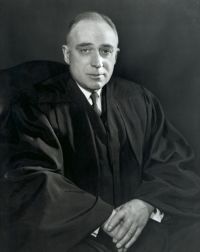
John Marshall Harlan II

John Marshall Harlan II

Summary

Portrait of John Marshall Harlan II John Marshall Harlan II Monroe v. Pape — Concurrence

Moreover, if indeed the legislature meant to distinguish between authorized and unauthorized acts and yet did not mean the statute to be inapplicable whenever there was a state constitutional provision which, reasonably interpreted, gave protection similar to that of a provision of the Fourteenth Amendment, would there not have been some explanation of this exception to the general rule? The fact that there is none in the legislative history at least makes more difficult a contention that these legislators were in fact making a distinction between use and misuse of state power.
Source: Wikisource

Portrait of John Marshall Harlan II John Marshall Harlan II Monroe v. Pape — Concurrence

Without being certain that Congress meant to deal with anything other than abuses so recurrent as to amount to 'custom, or usage.' One can agree with any Brother FRANKFURTER, in dissent, that Congress had no intention of taking over the whole field of ordinary state torts and crimes, without being certain that the enacting Congress would not have regarded actions by an official, made possible by his position, as far more serious than an ordinary state tort, and therefore as a matter of federal concern.
Source: Wikisource

Portrait of John Marshall Harlan II John Marshall Harlan II Monroe v. Pape — Concurrence

For there would be no likely state approval of or even acquiescence in a conspiracy to coerce a state official to deny equal protection. Indeed it is difficult to attribute to a Congress which forbad two private citizens from hindering an official's giving of equal protection an intent to leave that official free to deny equal protection of his own accord.
Source: Wikisource

Get perspective with Kwize: daily news enlightened by great literature