Summary

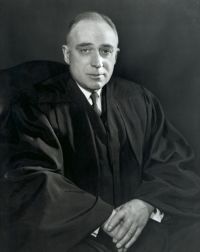
Portrait of John Marshall Harlan II John Marshall Harlan II Swift Company v. Wickham — Opinion of the Court

For a simple provision prohibiting the restraint of the enforcement of any state statute except by a three-judge court would manifestly have sufficed to embrace every such suit whatever its particular constitutional ground. It is thus quite permissible to read the phrase in question as one of limitation, signifying a congressional purpose to confine the three-judge court requirement to injunction suits depending directly upon a substantive provision of the Constitution, leaving cases of conflict with a federal statute (or treaty) to follow their normal course in a single-judge court.
Source: Wikisource

Portrait of John Marshall Harlan II John Marshall Harlan II Swift Company v. Wickham — Opinion of the Court

Whenever one judge stands up in a State and enjoins the governor and the attorney-general, the people resent it, and public sentiment is stirred, as it was in my State, when there was almost a rebellion, whereas if three judges declare that a state statute is unconstitutional the people would rest easy under it.' 45 Cong.Rec.
Source: Wikisource

Portrait of John Marshall Harlan II John Marshall Harlan II Swift Company v. Wickham — Opinion of the Court

Moreover, those who enacted the three-judge court statute should not be deemed to have been insensitive to the circumstance that single-judge decisions in conflict and pre-emption cases were always subject to the corrective power of Congress, whereas a 'constitutional' decision by such a judge would be beyond that ready means of correction and could be dealt with only by constitutional amendment.
Source: Wikisource

Get perspective with Kwize: daily news enlightened by great literature