Summary

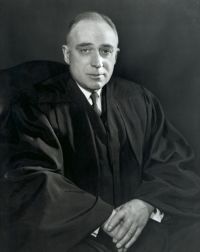
Portrait of John Marshall Harlan II John Marshall Harlan II Textile Workers Union of America v…

While we thus agree with the Court of Appeals that viewing Darlington as an independent employer the liquidation of its business was not an unfair labor practice, we cannot accept the lower court's view that the same conclusion necessarily follows if Darlington is regarded as an integral part of the Deering Milliken enterprise.
The closing of an entire business, even though discriminatory, ends the employer-employee relationship; the force of such a closing is entirely spent as to that business when termination of the enterprise takes place.
Source: Wikisource

Portrait of John Marshall Harlan II John Marshall Harlan II Textile Workers Union of America v…

The personal satisfaction that such an employer may derive from standing on his beliefs and the mere possibility that other employers will follow his example are surely too remote to be considered dangers at which the labor statutes were aimed. [15] Although employees may be prohibited from engaging in a strike under certain conditions, no one would consider it a violation of the Act for the same employees to quit their employment en masse, even if motivated by a desire to ruin the employer. The very permanence of such action would negate any future economic benefit to the employees.
Source: Wikisource

Portrait of John Marshall Harlan II John Marshall Harlan II Textile Workers Union of America v…

An employer may be encouraged to make a definitive decision to close on the theory that its mere announcement before a representation election will discourage the employees from voting for the union, and thus his decision may not have to be implemented. Such a possibility is not likely to occur, however, except in a marginal business; a solidly successful employer is not apt to hazard the possibility that the employees will call his bluff by voting to organize.
Source: Wikisource

Get perspective with Kwize: daily news enlightened by great literature