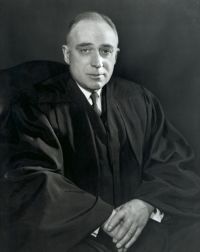
John Marshall Harlan II

John Marshall Harlan II

Summary

Portrait of John Marshall Harlan II John Marshall Harlan II Wesberry v. Sanders — Dissent

But since the slaves added to the representation only of their own State, Representatives from the slave States could have been thought to speak only for the slaves of their own States, indicating both that the Convention believed it possible for a Representative elected by one group to speak for another nonvoting group and that Representatives were in large degree still thought of as speaking for the whole population of a State.
Source: Wikisource

Portrait of John Marshall Harlan II John Marshall Harlan II Wesberry v. Sanders — Dissent

The qualifications on which the right of suffrage depend, are not perhaps the same in any two States. In some of the States the difference is very material. In every State, a certain proportion of inhabitants are deprived of this right by the Constitution of the State, who will be included in the census by which the Federal Constitution apportions the representatives.
Source: Wikisource

Portrait of John Marshall Harlan II John Marshall Harlan II Wesberry v. Sanders — Dissent

It goes without saying that it is beyond the province of this Court to decide whether equally populated districts is the preferable method for electing Representatives, whether state legislatures would have acted more fairly or wisely had they adopted such a method, or whether Congress has been derelict in not requiring state legislatures to follow that course. Once it is clear that there is no constitutional right at stake, that ends the case.
Source: Wikisource

Get perspective with Kwize: daily news enlightened by great literature