Summary

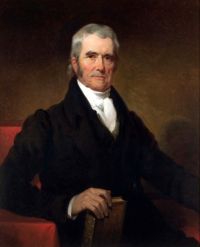
Portrait of John Marshall John Marshall Lessee of Sicard v. Davis — Opinion of the Court

These words, we think, can apply only to purchasers of the title asserted by virtue of the conveyance, and to creditors of the party who has made it. They protect such purchasers from a conveyance of which they had no notice, and which, if known, would have prevented their making the purchase; because it would have informed them that the title was bad, that the vendor had nothing to sell. But the purchaser from a different person of a different title, claimed under a different patent, would be entirely unconcerned in the conveyance.
Source: Wikisource

Portrait of John Marshall John Marshall Lessee of Sicard v. Davis — Opinion of the Court

Although he does not recollect the transaction with that precision which might be expected from an interested party, he remembers as much as could be expected after so long an interval from an unconcerned person, and enough, we think, to satisfy a court, in connexion with other circumstances, that the deed to which he subscribed his name as a witness was executed, and is the deed, a copy of which was offered by the plaintiff. He remembers attesting an instrument of writing at the house of Jonathan Phillips, which he believed to be a conveyance of land
Source: Wikisource

Get perspective with Kwize: daily news enlightened by great literature