Summary

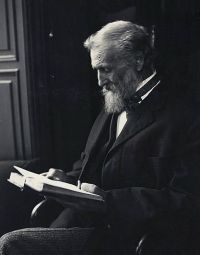
Portrait of John Muir John Muir The Mountains of California (1894)

The landscape, cold and bare, is reflected in its pure depths; the winds ruffle its glassy surface, and the sun fills it with throbbing spangles, while its waves begin to lap and murmur around its leafless shores,—sun-spangles during the day and reflected stars at night its only flowers, the winds and the snow its only visitors. Meanwhile, the glacier continues to recede, and numerous rills, still younger than the lake itself, bring down glacier-mud, sand-grains, and pebbles, giving rise to margin-rings and plats of soil. To these fresh soil-beds come many a waiting plant.
Source: Gutenberg

Portrait of John Muir John Muir The Mountains of California

The big drops sift through the pine-needles, plash and patter on the granite pavements, and pour down the sides of ridges and domes in a network of gray, bubbling rills. In a few minutes the cloud withers to a mesh of dim filaments and disappears, leaving the sky perfectly clear and bright, every dust-particle wiped and washed out of it. Everything is refreshed and invigorated, a steam of fragrance rises, and the storm is finished—one cloud, one lightning-stroke, and one dash of rain. This is the Sierra mid-summer thunder-storm reduced to its lowest terms.
Source: Gutenberg

Portrait of John Muir John Muir The Mountains of California (1894)

He is the mountain streams' own darling, the humming-bird of blooming waters, loving rocky ripple-slopes and sheets of foam as a bee loves flowers, as a lark loves sunshine and meadows. Among all the mountain birds, none has cheered me so much in my lonely wanderings,—none so unfailingly. For both in winter and summer he sings, sweetly, cheerily, independent alike of sunshine and of love, requiring no other inspiration than the stream on which he dwells. While water sings, so must he, in heat or cold, calm or storm, ever attuning his voice in sure accord
Source: Gutenberg

Get perspective with Kwize: daily news enlightened by great literature