Summary

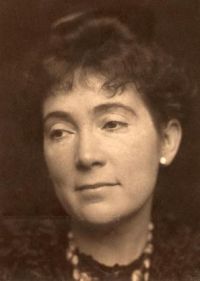
Portrait of John Oliver Hobbes John Oliver Hobbes A Study in Temptations — Chapter VII. Showing How Some Very Necessary Information May Seem Like a… (1894)

It is an obvious truism that love in all human relations is, in the very nature of things, selfish; those who love unselfishly only do so by living in a state of constant warfare with their meaner instincts. The natural desire is to absorb every thought and moment of the loved being; to begrudge every interest, and dislike all things and anything which would seem to distract the You from incessant dependence on the Me. This is the undisciplined, raw desire: many conquer it—Wrath, for instance; more, like Sophia, do not.
Source: Wikisource

Portrait of John Oliver Hobbes John Oliver Hobbes A Study in Temptations — Chapter VII. Showing How Some Very Necessary Information May Seem Like a… (1894)

A woman who is really living an immoral life always feels, like a condemned criminal, that the verdict is, if hard to bear, certainly just. But to Sophia, conscious of her innocence and only too proud to be the wife of the man she loved and honoured above all others, the mud pellets [6] aimed at her reputation, stuck like knives in her heart.
Source: Wikisource

Portrait of John Oliver Hobbes John Oliver Hobbes A Study in Temptations — Chapter VII. Showing How Some Very Necessary Information May Seem Like a… (1894)

Now young Mauden, fresh from Oxford, [18] with much learning and no wisdom, with Plato [19] in his brain, the Odyssey [20] next his heart, and Aristophanes [21] in his portmanteau [22] —Mauden, who could find the whole of Aristotle in a pause, was exactly the sort of clever youth to persuade a fresh woman into a dull pedant.
Source: Wikisource

Get perspective with Kwize: daily news enlightened by great literature