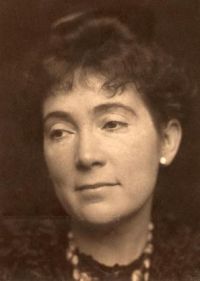
John Oliver Hobbes

John Oliver Hobbes

Summary

Portrait of John Oliver Hobbes John Oliver Hobbes Robert Orange

It is so hard not to think of you too often. But I have had a great deal of sorrow, and everything I have in the world—except you—is a grief. I know that we are not born to be happy, and so, I wonder, have we stolen our happiness? If it is a gift—I know not what to do with it. I cannot speak a happy language: the atmosphere is strange and frightens me. Dear Robert, I am terrified, uncertain, but when we meet to-morrow you will give me courage. And then, as we shall not part again, I need never again be, as I am now, too anxious. Your Brigit.”
Reckage's voice broke in again.
Source: Gutenberg

Portrait of John Oliver Hobbes John Oliver Hobbes Robert Orange

There were days, no doubt, and weeks when Orange found every counsel, a mockery, and every law, a paradox. The strife between the flesh and the spirit went on in his life as it does in all lives, but he was one who held, that, whatever the issue of it all might be, a man must be a man while he may—losing himself neither in the whirl of passion nor in the enervating worlds of reverie, but accepting the fulness of existence—its pains, vanities, pleasures, cares, sorrows,—with a fighter's courage and the fortitude of an immortal soul.
Source: Gutenberg

Portrait of John Oliver Hobbes John Oliver Hobbes Robert Orange

You are so human, Sara. I would far sooner kill you than write poetry to you. You are life—not literature. That little thing with shining hair and a porcelain face is for dreams. Of course, he will always love her—after a fashion. He might even compare you with her and find her your [271] superior in every way—except as a woman. We may be at moments poets, at moments saints, but the greater part of the time, a man is a man. And you are no friend for a man. Pensée Fitz Rewes might answer well enough; she has had sorrow, she has two children, she has a gentle, maternal air.
Source: Gutenberg

Get perspective with Kwize: daily news enlightened by great literature