Summary

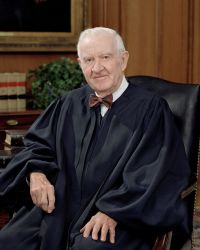
Portrait of John Paul Stevens John Paul Stevens Chauffeurs Teamsters and Helpers Local No…

Obvious differences between a union and a trustee will exist in other contexts. I would conclude only that, under the analysis directed by our precedents, the respondents may not insist on a jury trial. When all rights and remedies are considered, their action resembles a suit heard by the courts of equity more than a case heard by the courts of law. See Tull, 481 U.S., at 417, 107 S.Ct., at 1835. From this alone it follows that the respondents have no jury trial right on their duty of fair representation claims against the Union.
Source: Wikisource

Portrait of John Paul Stevens John Paul Stevens Chauffeurs Teamsters and Helpers Local No…

Actions which, beyond all question, are equitable in nature may involve some predicate inquiry that would be submitted to a jury in other contexts. For example, just as the plaintiff in a duty of fair representation action against his union must show breach of the collective-bargaining agreement as an initial matter, in an action against a trustee for failing to pursue a claim the beneficiary must show that the claim had some merit.
Source: Wikisource

Portrait of John Paul Stevens John Paul Stevens Chauffeurs Teamsters and Helpers Local No…

Duty of fair representation suits are for the most part ordinary civil actions involving the stuff of contract and malpractice disputes. There is accordingly no ground for excluding these actions from the jury right.
In my view, the evolution of this doctrine through suits tried to juries, the useful analogy to common-law malpractice cases, and the well-recognized duty to scrutinize any proposed curtailment of the right to a jury trial "with the utmost care," ante, at 565, provide a plainly sufficient basis for the Court's holding today.
Source: Wikisource

Get perspective with Kwize: daily news enlightened by great literature