Summary

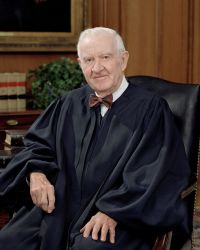
Portrait of John Paul Stevens John Paul Stevens United States v. Smith — Dissenting Opinion

Nevertheless, this action is consistent with Congress' general intent, expressed throughout the hearings and in the House Report, that it not curtail any pre-existing remedies of tort victims. Unless the amendment was intended to preserve the Gonzalez Act remedy, it was essentially without purpose-a result Congress clearly could not have intended.
The Court's reading of the Liability Reform Act makes § 5 (b) (2) (B) superfluous. [8] Indeed, the Court never says what kind of statutory violation § 5 (b) (2) (B) is meant to protect, nor does Congress provide any specific guidance.
Source: Wikisource

Portrait of John Paul Stevens John Paul Stevens United States v. Smith — Dissenting Opinion

Congress enacted the Liability Reform Act to protect all federal employees from the risk of personal liability that was thought to have been created by Westfall. Congress was particularly concerned that lower level employees, the rank and file "who are least likely to exercise discretion in carrying out their duties," were among those who were most likely to be affected by the Westfall decision.
Source: Wikisource

Portrait of John Paul Stevens John Paul Stevens United States v. Smith — Dissenting Opinion

The Department of Defense (Department) provides medical and dental care for families of service personnel stationed abroad. Subsection (f) of the Gonzalez Act authorizes the Department to indemnify its health care personnel serving overseas in the event that they are sued for malpractice. [1] Regulations issued pursuant to subsection (f) make the United States the real party in interest in such a tort action.
Source: Wikisource

Get perspective with Kwize: daily news enlightened by great literature