Summary

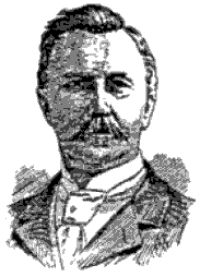
Portrait of John Randolph Spears John Randolph Spears The history of our Navy from its origin to the present day… (1897)

At that Warrington hauled the Peacock close under the port quarter of the Epervier and opened a deadly fire of solid shot directed chiefly at the enemy’s water-line—the favorite target of the Yankee gunners. One easily pictures the scene at this time as the Yankee crews, stripped to the waist, in the warm summer air, worked like white devils in the sulphurous smoke over their guns. They waved their arms and cheered as they saw the shot knock the splinters low down on the black-painted hull of the half-obscured enemy that was now adrift, unable to turn either to port or starboard.
Source: Gutenberg

Portrait of John Randolph Spears John Randolph Spears The history of our Navy from its origin to the present day… (1897)

Every shot struck the Yankee flagship, and that was the most frightful blast received by any Yankee ship in all this war. The Saratoga reeled and shivered as the iron ploughed through her planks and timbers. More than one hundred men were thrown to the deck by the shock, and forty of them failed to get up, for they were killed or wounded, First Lieutenant Peter Gamble being among the slain.
Source: Gutenberg

Portrait of John Randolph Spears John Randolph Spears The history of our Navy from its origin to the present day… (1897)

For not only were the long twenty-fours of the Constitution far and away better than the short thirty-twos of the British ships, just as the long guns of the Phœbe and Cherub were superior to the short guns of the Essex at Valparaiso: the crew of the Constitution had been trained very much better than any ordinary British crew. More important still, the force of the Constitution was concentrated in a single ship under the command of one able man.
Source: Gutenberg

Get perspective with Kwize: daily news enlightened by great literature