Summary

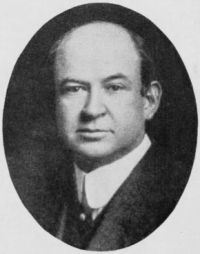
Portrait of John Spencer Bassett John Spencer Bassett The Cambridge History of American Literature (1917)

Henceforth the future of the colony was with those who could clear the forests, establish plantations, and withstand the agues of the mosquito-infested lowlands. The leaves of fate for Virginia were not to be thumbed in a book. They stood broad and strong over the rich bottom-lands, where the summer sun seemed to the onlooker to deck their oily surfaces with a coat of silver. In the days of the gentlemen adventurers nine men wrote about the history of the colony; in the days of the tobacco growers a century could not show as many.
Source: Wikisource

Portrait of John Spencer Bassett John Spencer Bassett The Cambridge History of American Literature (1917)

No one has cast doubts on the accuracy of William Bradford, of Plymouth, or of John Winthrop, of Massachusetts Bay. While not historical compositions as such, their books are, in vivid and sustained human interest, as well as in the power of depicting the conditions of the first settlements, a most adequate and successful kind of history. Each is a journal written by a man who stood at the head of affairs, whose life was so important in his day that we have in it a reflection of the progress of the important things of the colony in which he lived.
Source: Wikisource

Portrait of John Spencer Bassett John Spencer Bassett The Cambridge History of American Literature (1917)

The Revolutionary War gave our historians new motives for writing. A glorious struggle was to be described; the states, just raised out of the rank of colonies, began to demand the preservation of their earliest history; and the nation, inspired by great hopes for the future, felt that it must have loyal men to prepare the record of common growth and common achievement. The men who responded to these impulses were, perhaps, less cultured than the best of the old historians.
Source: Wikisource

Get perspective with Kwize: daily news enlightened by great literature