Summary

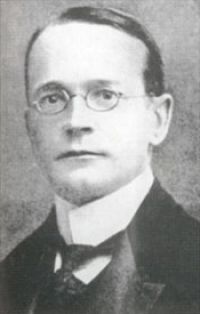
Portrait of Joseph McCabe Joseph McCabe The Human Origin of Morals — Chapter III. The Dawn of Conscience

Morality is founded on emotions, not on a perception of utility, he says. Acts are deemed "good" or "bad" for the same reason that the sunshine is said to be hot and ice, cold. They excite certain emotions. Our moral ideas are therefore "generalizations of tendencies in certain phenomena (human acts) to call forth moral emotions." Fundamentally, it is sympathy and resentment that express themselves in these emotions.
Source: Wikisource

Portrait of Joseph McCabe Joseph McCabe The Human Origin of Morals — Chapter III. The Dawn of Conscience

When Professor Westermarck says that the recognition of different degrees (or "quantities") of badness by a savage proves his emotional theory, one is surprised. It shows only that the savage perceives some acts to be more injurious than others.
But we may to some extent reconcile the theories by admitting that in the mind of the lowest peoples there is no conscious recognition that certain classes of acts are good or bad. That is, in fact, a material part of my theory. Man is moral before he has morality. He resents an individual "bad" act before he has moral rules. He does not generalize.
Source: Wikisource

Get perspective with Kwize: daily news enlightened by great literature