Summary

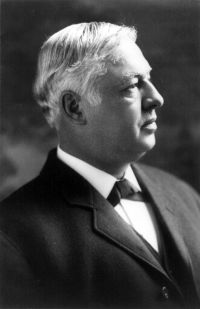
Portrait of Joseph Rucker Lamar Joseph Rucker Lamar Choate v. Trapp — Opinion of the Court

This is certainly a contract clothed in forms of unusual solemnity. The privilege, though for the benefit of the Indians, is annexed by the terms which create it, to the land itself, not to their persons.' And it was thereupon held that the right was not affected by the later statute repealing the exemption. The case here is much stronger. For the tax exemption, which adds value to the property, is not perpetual, but is attached to the land only so long as the Indian retains the title, and in no event to exceed twenty-one years.
Source: Wikisource

Portrait of Joseph Rucker Lamar Joseph Rucker Lamar Choate v. Trapp — Opinion of the Court

The case was carried to the supreme court of the state, which held that Oklahoma was not a party to any contract with the Indians; that the United States, by virtue of its governmental power over the Indians, could have substituted title in severalty for ownership in common without plaintiffs' consent, and that, for want of a consideration, the provision that the land should be nontaxable was not a contract, but a mere gratuity which could be withdrawn at will.
Source: Wikisource

Portrait of Joseph Rucker Lamar Joseph Rucker Lamar Choate v. Trapp — Opinion of the Court

The patent and the legislation of Congress must be construed together, and when so construed, they show that Congress, in consideration of the Indians' relinquishment of all claim to the common property, and for other satisfactory reasons, made a grant of land which should be nontaxable for a limited period. The patent issued in pursuance of those statutes gave the Indian as good a title to the exemption as it did to the land itself.
Source: Wikisource

Get perspective with Kwize: daily news enlightened by great literature