Summary

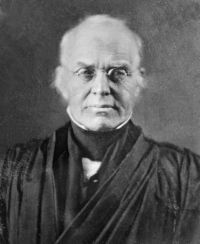
Portrait of Joseph Story Joseph Story Boyle v. Zacharie (31 U.S. 648…

We consider all motions of this sort to quash executions, as addressed to the sound discretion of the court; and as a summary relief, which the court is not compellable to allow. The party is deprived of no right by the refusal; and he is at full liberty to redress his grievance by writ of error, or audita querela; or other remedy known to the common law. The refusal to quash is not, in the sense of the common law, a judgment; much less is it a final judgment. It is a mere interlocutory order. Even at the common law, error only lies from a final judgment
Source: Wikisource

Portrait of Joseph Story Joseph Story Boyle v. Zacharie (31 U.S. 648…

A writ of error would only lie upon a final judgment or determination of a cause; and it was never known to lie upon a motion to set aside process. And in the close of his opinion, he emphatically observed, if the case 'is to be carried from this court to the supreme court of the United States, I should hope, for the credit of our practice, it might be on the audita querela, and not upon such a strange mode of proceeding as that of a writ of error brought upon a motion and affidavit.' There are other cases leading to the same conclusion.
Source: Wikisource

Portrait of Joseph Story Joseph Story Boyle v. Zacharie (31 U.S. 648…

The bill which had been filed by the plaintiff in error on the equity side of the court having been dismissed, the attorney for the plaintiffs, on the 10th June 1829, gave an order to the clerk to issue a writ of venditioni exponas, which was issued on the 29th August 1829, and delivered to the marshal, who made a return thereof to the December term 1829, that he had received the amount of the execution from the defendant, and had it ready to bring into court.
Source: Wikisource

Get perspective with Kwize: daily news enlightened by great literature