Summary

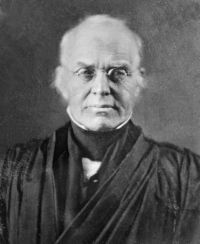
Portrait of Joseph Story Joseph Story Crane v. Lessee of Morris — Opinion of the Court

The solemn probate of a deed by a witness upon oath before a magistrate, for the purpose of having it recorded, and the certificate of the magistrate of its due probate upon such testimony, are certainly entitled to more weight as evidence, than the mere unexplained proof of the hand-writing of a witness after his death. The one affords only a presumption of the due execution of the deed from the mere fact, that the signature of the witness is to the attestation clause
Source: Wikisource

Portrait of Joseph Story Joseph Story Crane v. Lessee of Morris — Opinion of the Court

If they were acting as owners of the fee, then that circumstance afforded, pro tanto, presumption against the delivery of the settlement deed; since parties acting under and entitled to act solely under the power in that deed, would naturally refer to it as the foundation of their conveyances. Now, so far as the presumption would go, it was fairly and fully left to the jury as evidence, by the very instruction given to the court.
Source: Wikisource

Portrait of Joseph Story Joseph Story Crane v. Lessee of Morris — Opinion of the Court

As a covenant, it has a sensible and just operation in favour of the trustees. In legal contemplation, then, this clause makes Morris, strictly speaking, only a covenantor, and not a grantor. But as to the real estate passed to the trustees by the indenture, to which alone the instruction could properly apply, he was clearly a mere grantee. If, therefore, there was any error in the circuit court on this point, it was not an error prejudicial to the defendant, but to the plaintiff, as to its bearing on the question of the possession and delivery of the settlement deed.
Source: Wikisource

Get perspective with Kwize: daily news enlightened by great literature