Summary

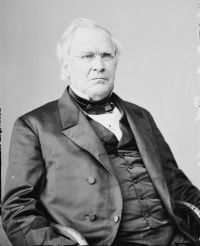
Portrait of Robert Cooper Grier Robert Cooper Grier Reed v. Proprietors of Locks and Canals on Merrimac River…

The burden being upon the tenants to satisfy the jury that the mortgage from Melvin and wife to Kittredge included the demanded premises, the instruction of the presiding judge,-'That if, from the evidence, looking to monuments, length of lines, quantities, actual occupation, &c., the jury should believe that it was more probable that the parties to the mortgage of 1782 intended to include therein the demanded premises than otherwise, they should return their verdict for the tenants,'-was wrong, and did not in law satisfy the burden of proof resting upon the tenants.
Source: Wikisource

Portrait of Robert Cooper Grier Robert Cooper Grier Reed v. Proprietors of Locks and Canals on Merrimac River…

Because the whole transaction of the widow's claim and receipt of the rent, and express disclaimer on the part of the heirs, as shown by the evidence, was not evidence, to be weighed by the jury, of a continued occupation by the lessees for and in behalf of those entitled by law to the rights which Kittredge claimed when alive.
Source: Wikisource

Portrait of Robert Cooper Grier Robert Cooper Grier Reed v. Proprietors of Locks and Canals on Merrimac River…

It cannot be doubted, that, where a deed is indefinite, uncertain, or ambiguous in the description of the boundaries of the land conveyed, the construction given by the parties themselves, as shown by their acts and admissions, is deemed to be the true one, unless the contrary be clearly shown. The difficulty in the application of the descriptive portion of a deed to external objects, usually arises from what is called a latent ambiguity, which has its origin in parol testimony, and must necessarily be solved in the same way.
Source: Wikisource

Get perspective with Kwize: daily news enlightened by great literature