Summary

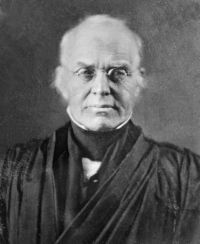
Portrait of Joseph Story Joseph Story Terrett v. Taylor — Opinion of the Court

But, although it may be true that 'religion can be directed only by reason and conviction, not by force or violence,' and that 'all men are equally entitled to the free exercise of religion according to the dictates-of-conscience,' as the bill of rights of Virginia declares, yet it is difficult to perceive how it follows as a consequence that the legislature may not enact laws more effectually to enable all sects to accomplish the great objects of religion by giving them corporate rights for the managment of their property, and the regulation of their temporal as well as spiritual concerns.
Source: Wikisource

Portrait of Joseph Story Joseph Story Terrett v. Taylor — Opinion of the Court

Nor are we able to perceive any sound reason why the church lands escheated or devolved upon the state by the revolution any more than the property of any other corporation created by the royal bounty or established by the legislature. The revolution might justly take away the public patronage, the exclusive cure of souls, and the compulsive taxation for the support of the church.
Source: Wikisource

Portrait of Joseph Story Joseph Story Terrett v. Taylor — Opinion of the Court

It is asserted by the legislature of Virginia, in 1798 and 1801, that this statute was inconsistent with the bill of rights and constitution of that state, and therefore void. Whatever weight such a declaration might properly have as the opinion of wise and learned men, as a declaration of what the law has been or is, it can have no decisive authority. It is, however, encountered by the opinion successively given by former legislatures from the earliest existence of the constitution itself, which were composed of men of the very first rank for talents and learning.
Source: Wikisource

Get perspective with Kwize: daily news enlightened by great literature