Summary

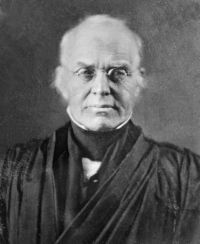
Portrait of Joseph Story Joseph Story United States v. Coombs — Opinion of the Court

A prosecution in the state court would, in many cases, be equally liable to a failure, from the utter impossibility of establishing whether the act was not committed within the admiralty and maritime jurisdiction of the United States. The wisdom of the enactment, therefore, which, upon a prosecution in the courts of the United States, should cut off any defence founded upon the mere absence of such proof where the offence was committed, would seem to be as clear as its policy is obvious.
Source: Wikisource

Portrait of Joseph Story Joseph Story United States v. Coombs — Opinion of the Court

Any offence which thus interferes with, obstructs, or prevents such commerce and navigation, though done on land, may be punished by congress, under its general authority to make all laws necessary and proper to execute their delegated constitutional powers. No one can doubt, that the various offences enumerated in the ninth section of the act, are all of a nature which tend essentially to obstruct, prevent, or destroy the due operations of commerce and navigation with foreign nations, and among the several states.
Source: Wikisource

Portrait of Joseph Story Joseph Story United States v. Coombs — Opinion of the Court

Now, this is wholly inapplicable to the courts of the United States, where admiralty process, both in the instance and prize sides of the court, can be served on land as well as on water. These explanations have been made, for the sake of clearing the case from some apparent obscurities and difficulties, as to the nature and extent of the admiralty jurisdiction, in cases where it is limited by the locality of the acts done. In our judgment, the authority of congress, under this clause of the constitution, does not extend to punish offences committed above and beyond high water mark.
Source: Wikisource

Get perspective with Kwize: daily news enlightened by great literature