Summary

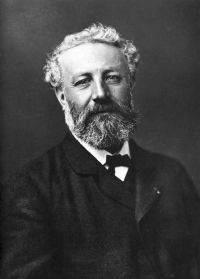
Portrait of Jules Verne Jules Verne 20,000 Leagues Under the Seas… (1870)

Little by little, vegetation spread. Tiny animals—worms, insects—rode ashore on tree trunks snatched from islands to windward. Turtles came to lay their eggs. Birds nested in the young trees. In this way animal life developed, and drawn by the greenery and fertile soil, man appeared. And that's how these islands were formed, the immense achievement of microscopic animals.
Near evening Reao Island melted into the distance, and the Nautilus noticeably changed course.
Source: Wikisource

Portrait of Jules Verne Jules Verne 20,000 Leagues Under the Seas… (1870)

On the 23rd, several officers circled the island and brought back some rubble of little importance. The natives, adopting a system of denial and evasion, refused to guide them to the site of the casualty. This rather shady conduct aroused the suspicion that the natives had mistreated the castaways; and in truth, the natives seemed afraid that Dumont d'Urville had come to avenge the Count de La Pérouse and his unfortunate companions.
Source: Wikisource

Portrait of Jules Verne Jules Verne 20,000 Leagues Under the Seas… (1870)

Later on, this new island will be fused to its neighboring island groups, and a fifth continent will stretch from New Zealand and New Caledonia as far as the Marquesas Islands.
The day I expounded this theory to Captain Nemo, he answered me coldly:
"The earth doesn't need new continents, but new men!"
Sailors' luck led the Nautilus straight to Reao Island, one of the most unusual in this group, which was discovered in 1822 by Captain Bell aboard the Minerva. So I was able to study the madreporic process that has created the islands in this ocean.
Source: Wikisource

Get perspective with Kwize: daily news enlightened by great literature