Summary

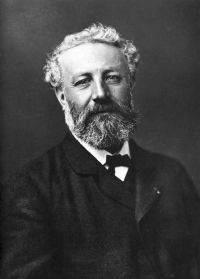
Portrait of Jules Verne Jules Verne Cæsar Cascabel — Part 1, Chapter III (1890)

THE SIERRA NEVADA. HOW many people have had dreams, at one time or other, of a journey performed in a movable house, after gypsy fashion! of a journey exempt of all worry concerning hotels, and inns, and unreliable beds, and still more unreliable cooks, when the country to be traversed is no more than besprinkled with hamlets or villages! That which wealthy amateurs do daily on board their pleasure yachts, surrounded by all the comfort of their transplanted home, few are the people who have done it by means of a vehicle ad hoc.
Source: Wikisource

Portrait of Jules Verne Jules Verne Cæsar Cascabel — Part 1, Chapter III (1890)

The whole was lighted by two paraffine lamps, veritable ship lamps that swung to and fro with the motion of the vehicle when the roads were unlevel; moreover, so as to allow the light of day to penetrate the various compartments, half a dozen little windows, with lead-cased panes, light muslin curtains and colored bands, gave to the Fair Rambler the appearance of the saloon on a Dutch galliot.
Clovy, naturally easy to please, slept in the first compartment, on a hammock that he hung up at night and took down at day-break next morning.
Source: Wikisource

Portrait of Jules Verne Jules Verne Cæsar Cascabel — Part 1, Chapter III (1890)

Cascabel, John and Clovy, the earliest risers in the Fair Rambler, went to the spot where Vermont and Gladiator had been penned up, the night before.
Both were there, but the three horses of the farmer had disappeared.
As they could not be very far off, John was about telling the drivers to go look for them; neither was to be seen about the camping-ground.
“Where are they?” said he.
“Very likely,” answered his father, “they are running after the horses.”
“Hallo! Hallo!” shouted Clovy in a tone of voice that should be heard a considerable distance away.
Source: Wikisource

Get perspective with Kwize: daily news enlightened by great literature