Summary

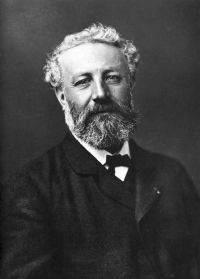
Portrait of Jules Verne Jules Verne Michael Strogoff (1876) — Chapter XXIX (1876)

The town, half Byzantine, half Chinese, becomes European as soon as he sees its macadamized roads, bordered with pavements, traversed by canals, planted with gigantic birches, its houses of brick and wood, some of which have several stories, the numerous equipages which drive along, not only tarantasses but broughams and coaches; lastly, its numerous inhabitants far advanced in civilization, to whom the latest Paris fashions are not unknown.
Source: Wikisource

Portrait of Jules Verne Jules Verne Michael Strogoff (1876) — Chapter XXIX (1876)

The authorities had therefore no fear with regard to admitting the peasants of the valley of the Angara, and leaving a desert between the invaders and the town.
Irkutsk is the residence of the governor-general of Eastern Siberia. Below him acts a civil governor, in whose hands is the administration of the province; a head of police, who has much to do in a town where exiles abound; and, lastly, a mayor, chief of the merchants, and a person of some importance, from his immense fortune and the influence which he exercises over the people.
Source: Wikisource

Portrait of Jules Verne Jules Verne Michael Strogoff (1876) — Chapter XXIX (1876)

The political exiles, distributed over the province, had been collected in Irkutsk, from the beginning of the invasion. They had obeyed the order to rally in the town, and leave the villages where they exercised their different professions, some doctors, some professors, either at the Gymnasium, or at the Japanese School, or at the School of Navigation. The Grand Duke, trusting like the Czar in their patriotism, had armed them, and they had thoroughly proved their bravery.
Source: Wikisource

Get perspective with Kwize: daily news enlightened by great literature