Summary

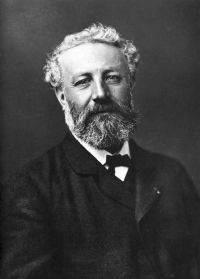
Portrait of Jules Verne Jules Verne The Blockade Runners — I. The Dolphin (1865)

A rich, powerful, intelligent house of business was that of Vincent Playfair & Co., in a social sense, an old and honourable family, descended from those tobacco lords who built the finest quarters of the town. These clever merchants, by an act of the Union, had founded the first Glasgow warehouse for dealing in tobacco from Virginia and Maryland.
Source: Wikisource

Portrait of Jules Verne Jules Verne The Blockade Runners — I. The Dolphin (1865)

THE DOLPHIN
The Clyde was the first river whose waters were lashed into foam by a steam-boat. It was in 1812 when the steamer called the Comet ran between Glasgow and Greenock, at the speed of six miles an hour. Since that time more than a million of steamers or packet-boats have plied this Scotch river, and the inhabitants of Glasgow must be as familiar as any people with the wonders of steam navigation.
Source: Wikisource

Portrait of Jules Verne Jules Verne The Blockade Runners — I. The Dolphin (1865)

But all these particulars could not in any way justify the eagerness of the people: taken altogether, the Dolphin was nothing more or less than an ordinary ship. Would her launching present some mechanical difficulty to be overcome? Not any more than usual. The Clyde had received many a ship of heavier tonnage, and the launching of the Dolphin would take place in the usual manner.
In fact, when the water was calm, the moment the ebb-tide set in, the workmen began to operate.
Source: Wikisource

Get perspective with Kwize: daily news enlightened by great literature