Summary

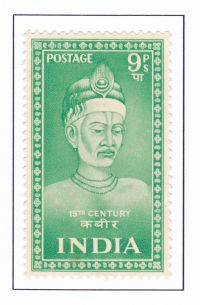
Portrait of Kabir Kabir,  One Hundred Poems by Kabir (1915)

“ It is by the simplest metaphors, by constant appeals to needs, passions, relations which all men understand--the bridegroom and bride, the guru and disciple, the pilgrim, the farmer, the migrant bird--that he drives home his intense conviction of the reality of the soul’s intercourse with the Transcendent. There are in his universe no fences between the “natural” and “supernatural” worlds; everything is a part of the creative Play of God, and therefore--even in its humblest details--capable of revealing the Player’s mind. ”
Source: Wikisource

Portrait of Kabir Kabir,  One Hundred Poems by Kabir (1915)

“ Now Kabīr, as we might expect in one whose reactions to the spiritual order were so wide and various, uses by turn all the symbols of sense. He tells us that he has “seen without sight” the effulgence of Brahma, tasted the divine nectar, felt the ecstatic contact of Reality, smelt, the fragrance of the heavenly flowers. But he was essentially a poet and musician: rhythm and harmony were to him the garments of beauty and truth. Hence in his lyrics he shows himself to be, like Richard Rolle, above all things a musical mystic. Creation, he says again and again, is full of music: it is music. ”
Source: Wikisource

Portrait of Kabir Kabir,  One Hundred Poems by Kabir (1915)

“ A great religious reformer, the founder of a sect to which nearly a million northern Hindus still belong, it is yet supremely as a mystical poet that Kabīr lives for us. His fate has been that of many revealers of Reality. A hater of religious exclusivism, and seeking above all things to initiate men into the liberty of the children of God, his followers have honoured his memory by re-erecting in a new place the barriers which he laboured to cast down. But his wonderful songs survive, the spontaneous expressions of his vision and his love ”
Source: Wikisource

Get perspective with Kwize: daily news enlightened by great literature