“ Kabîr says: "Come, O Dharmadas! and see my great Lord's Durbar." XIX II. 20. paramâtam guru nikat virâjatn O my heart! the Supreme Spirit, the great Master, is near you: wake, oh wake! Run to the feet of your Beloved: for your Lord stands near to your head. You have slept for unnumbered ages; this morning will you not wake? XX II. 22. man tu pâr utar kânh jaiho To what shore would you cross, O my heart? there is no traveller before you, there is no road: Where is the movement, where is the rest, on that shore? There is no water; no boat, no boatman, is there; There is not so much as a rope to tow the boat, nor a man to draw ”
Kabir
Biographical details

Kabir (c. 1440–1518), a 15th-century Indian mystic poet and saint, emerged as a key figure in the Bhakti movement, critiquing institutionalized religious practices in both Hinduism and Islam while promoting inner devotion and spiritual unity. His verses, found in Sikh scriptures like the Guru Granth Sahib and Hindu texts, emphasize transcending ego to perceive divine truth in all existence.
Works such as Songs of Kabir and One Hundred Poems of Kabir reflect his synthesis of Sufi and Vaishnava ideas, challenging dogma through metaphors of love and renunciation. Kabir’s legacy endures through the Kabir Panth, a spiritual tradition that enshrines his vision of universal interconnectedness and ethical living.
Quotes by Kabir
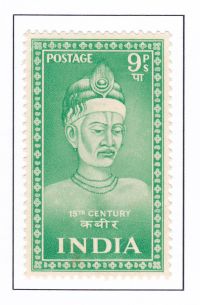 Kabir,
One Hundred Poems of Kabir
(1915)
Kabir,
One Hundred Poems of Kabir
(1915)
“ hope for Him whilst you live, know whilst you live, understand whilst you live: for in life deliverance abides. If your bonds be not broken whilst living, what hope of deliverance in death? It is but an empty dream, that the soul shall have union with Him because it has passed from the body: If He is found now, He is found then, If not, we do but go to dwell in the City of Death. If you have union now, you shall have it hereafter. ”
Kabir,
One Hundred Poems by Kabir
(1915)
“ It is by the simplest metaphors, by constant appeals to needs, passions, relations which all men understand--the bridegroom and bride, the guru and disciple, the pilgrim, the farmer, the migrant bird--that he drives home his intense conviction of the reality of the soul’s intercourse with the Transcendent. There are in his universe no fences between the “natural” and “supernatural” worlds; everything is a part of the creative Play of God, and therefore--even in its humblest details--capable of revealing the Player’s mind. ”

