Summary

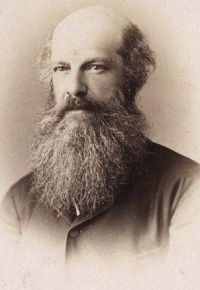
Portrait of Laurence Oliphant Laurence Oliphant Haifa; or, Life in modern Palestine

A road from here leads up the steep hillside to Safed. The view from it, as we ascend to some elevation above the plain, is very beautiful. That fertile expanse which Josephus calls “the ambition of nature,” lies stretched at our feet, with the waters of the lake rippling upon its pebbly beach, while we look right up the gorge of Hammam, its beetling cliffs on both sides towering in rugged cave-perforated precipices to a height of twelve hundred feet above the tiny stream which, compressed between these lofty walls of limestone and basalt, winds its way to the lake.
Source: Gutenberg

Portrait of Laurence Oliphant Laurence Oliphant Haifa; or, Life in modern Palestine

Haifa, Oct. 7.—The village of Mugheir, where we halted to rest after our long and weary scramble from the Jordan valley, is one of the most out-of-the-way places to be found in Palestine. It is not on the way anywhere, but a sort of Ultima Thule—the last spot where ground fit for cultivation is to be found. It stands on the margin of a charming little plain, where there is a fine olive grove. Indeed, looking westward, the prospect is cheery enough, but eastward it is wild rock, black, gloomy gorges, or less precipitous but equally barren valleys.
Source: Gutenberg

Portrait of Laurence Oliphant Laurence Oliphant Haifa; or, Life in modern Palestine

From the vine-covered terrace on which our camp is situated we look down a wild, rocky, precipitous gorge eighteen hundred feet upon the plain of the Kishon, scarce a mile distant, so steep is it. To the right this gorge widens into an amphitheatre, and the hillsides, sloping more gently, are terraced with vines, figs, and pomegranates, and at its head is the copious spring which supplies us with water, to which one of our donkeys makes several pilgrimages a day with a large earthen jar slung in a straw cradle on each side.
Source: Gutenberg

Get perspective with Kwize: daily news enlightened by great literature