Summary

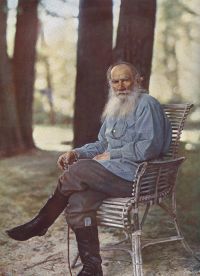
Portrait of Leo Tolstoy Leo Tolstoy Letter on the Question of Negroes

Having once realised this fallacy, Garrison put forward against slavery neither the suffering of slaves, nor the cruelty of slaveholders, not the social equality of men, but the eternal Christian law of refraining from opposing evil by violence; i.e., of "non-resistance". Garrison understood that which the most advanced among the fighters against slavery did not understand; that the only irrefutable argument against slavery is the denial of the right of any man over the liberty of another under any conditions whatsoever.
Source: Wikisource

Portrait of Leo Tolstoy Leo Tolstoy Letter on the Question of Negroes

It would seem quite clear that in the course of the last century, fourteen million people were killed, and that now the labour and lives of millions of men are spent on wars necessary to no one, and that all the land is in the hands of those who do not work on it, and all that the produce of human labour is swallowed up by those who do not work, and that all the deceits which reign in the world exist only because violence is allowed for the purpose of suppressing that which appears evil to some people, and that therefore one should endeavour to replace violence by persuasion.
Source: Wikisource

Portrait of Leo Tolstoy Leo Tolstoy Letter on the Question of Negroes

So that however sad it is to say so, the only explanation of the non-understanding of the significance of the principle of non-resistance to evil by violence consists in this, that the conditions of human life are so distorted that those who examine the principle of non-resistance imagine that its adaptation to life and the substitution of persuasion for coercion would destroy all possibility of that social organisation and of those conveniences of life which they enjoy.
Source: Wikisource

Get perspective with Kwize: daily news enlightened by great literature