Summary

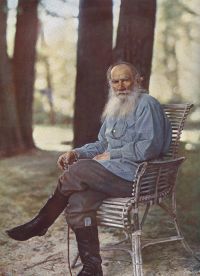
Portrait of Leo Tolstoy Leo Tolstoy Life of William Lloyd Garrison… (1904)

I told him that I recognize nonresistance to evil by violence because, having lived seventy-five years, I have never, except in discussions, encountered that imaginary brigand, who, before my eyes, desired to kill or violate a child, but that perpetually I did and do see not one, but millions of real brigands using violence towards children and women and men and old people and laborers in the name of the recognized right of violence over one’s fellows.
Source: Wikisource

Portrait of Leo Tolstoy Leo Tolstoy Life of William Lloyd Garrison… (1904)

The principle of nonresistance is not a principle of coercion, but of concord and love, and cannot be made coercively binding upon men. The principle of nonresistance to evil by violence, which consists in the substitution of persuasion for brute force, can only be accepted voluntarily. In whatever measure it is freely accepted by men and applied to life – according to the measure in which people renounce violence and establish their relations upon rational persuasion – only in that measure is true progress in the life of men accomplished.
Source: Wikisource

Portrait of Leo Tolstoy Leo Tolstoy Life of William Lloyd Garrison… (1904)

It would seem quite clear that fourteen million people were killed in the course of the last century, that the labor and lives of millions of men are now spent on wars necessary to no one, that all the land is in the hands of those who do not work on it, that all the produce of human labor is swallowed up by those who do not work, that all the deceits which reign in the world exist only because violence is allowed for the purpose of suppressing that which appears evil to some people, and that one should therefore endeavor to replace violence by persuasion.
Source: Wikisource

Get perspective with Kwize: daily news enlightened by great literature