Summary

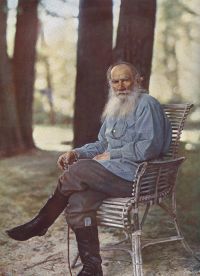
Portrait of Leo Tolstoy Leo Tolstoy What I Believe — Chapter 12

I can remember perfectly well that the feeling of enmity toward other nations, the assumption that a difference existed between them and myself, was not a feeling natural to me, but was grafted upon me by the senseless education given to me. But I now understand the meaning of the words, ‘Love your enemies, do good to them.’ You are all the children of one Father, therefore be like the Father; that is, make no distinction between men, treat all as brethren. I now see clearly that I can only attain happiness by being in unity with all my fellow-creatures.
Source: Wikisource

Portrait of Leo Tolstoy Leo Tolstoy What I Believe — Chapter 12

I understand the words that ‘he who divorces his wife,’ that is, the woman to whom he was first united, ‘forces her to commit adultery,’ and brings new evil into the world. My belief in this has changed my former estimate of what is good and noble or bad and base in life. The things that I had formerly prized – a refined, elegant life and the passionate and poetic love extolled by all poets and artists – has become wicked and hideous in my eyes. A hard working, poor, simple life, which masters human passions, alone seems desirable.
Source: Wikisource

Portrait of Leo Tolstoy Leo Tolstoy What I Believe — Chapter 12

When I did not know the truth I did not know true happiness. Thinking that evil was happiness, I fell into evil, and I doubted my right to long for happiness. Now, I have understood and believed that the happiness for which I long is the will of the Father, and is the lawful basis of my life. Christ says to me, ‘Live for your happiness and for that of others, but do not believe in the snares – temptations (σκανδαλος) – that attract you by a semblance of happiness, while they, in reality, deprive you of it and entice you into evil. Your happiness is in your unity with all men.
Source: Wikisource

Get perspective with Kwize: daily news enlightened by great literature