Summary

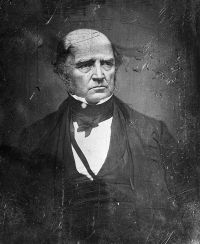
Portrait of Levi Woodbury Levi Woodbury Beals v. Hale — Opinion of the Court

One act says that the deeds and other conveyances not recorded in pursuance of it shall be void, thereby rendering it necessary to record the deeds referred to in the city register's office, under this law; if applicable, we are not only not entitled to recover, but the mortgage under which we claim is void, whatever the value of the premises, while the second law, or the one relating to 'mortgages,' in terms declares that the mortgage first recorded shall have preference in all courts of law and equity whatever.
Source: Wikisource

Portrait of Levi Woodbury Levi Woodbury Beals v. Hale — Opinion of the Court

Because it is a well settled principle of construction, that conveyances are, if practicable on any reasonable view of the subject, to be sustained rather than pronounced void, and also, that statues which apparently conflict with each other are to be reconciled, as far as may be on any fair hypothesis, and validity given to each, if it can be and is necessary to conform to usages under them, or to preserve the titles of property undisturbed.
Source: Wikisource

Portrait of Levi Woodbury Levi Woodbury Beals v. Hale — Opinion of the Court

On these facts, whether the recording of the first mortgage was legal or void must depend upon the construction of two statutes of the State of Michigan, both passed April 12th, 1827.
The demandant relies upon one of them, as being the only statute for recording 'mortgages,' and as his registry was duly made under that, he claims to recover. While the tenant relies upon the other statute, as embracing the case of mortgages, and as his was the only one recorded in conformity with it and others not so recorded are declared void, he asks for judgment in his favor.
Source: Wikisource

Get perspective with Kwize: daily news enlightened by great literature