Summary

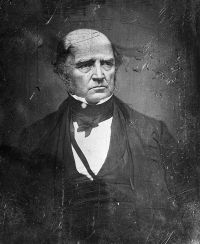
Portrait of Levi Woodbury Levi Woodbury Garland v. Davis — Opinion of the Court

On the contrary, however, if the action is to be considered as brought, not on any promise except as inducement, but on a wrongful act or misfeasance, as the plaintiff sets out his case in his declaration and still contends to be the truth, then it seems manifest that-nothing on that misfeasance, the essential point of the action, having been either traversed in the plea or found by the verdict-there is nothing upon which judgment can legally be rendered for either party on the merits.
Source: Wikisource

Portrait of Levi Woodbury Levi Woodbury Garland v. Davis — Opinion of the Court

To all this, in an advanced era of jurisprudence, it will hardly do to repeat from some of the old books, that a party is for ever to be barred either for the badness or the falsity of his plea, if it happens to be imperfect and is found against him, though he has not confessed the declaration, nor stated any facts in his plea inconsistent with merits.
Source: Wikisource

Portrait of Levi Woodbury Levi Woodbury Garland v. Davis — Opinion of the Court

The plea of non assumpsit may be so moulded as to make it a denial of the contract made between plaintiff and Franklin. As in covenant, the plea of non est factum is a good plea, though it merely puts in issue the actual execution of the instrument declared on, and neither denies the breach nor the alleged consequences. A special plea, putting in issue the contract which lies at the foundation of this action, would, therefore, not be an immaterial plea.
3. As a general rule, a party shall not be permitted to derive benefit from his own error.
Source: Wikisource

Get perspective with Kwize: daily news enlightened by great literature