Summary

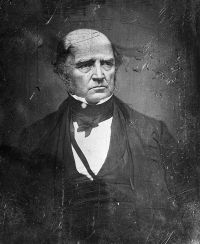
Portrait of Levi Woodbury Levi Woodbury Townsends v. Jemison — Opinion of the Court

The omission of the clerk to enter on the record the judgment upon the demurrer, or to state its waiver, if it was abandoned, would be merely a clerical mistake; and it is well settled at common law, that a misprision by a clerk, if the case be clearly that alone, though it consist of the omission of an important word or expression, is not a good ground to reverse a judgment, where substance enough appears to show that all which was proper and required was properly done.
Source: Wikisource

Portrait of Levi Woodbury Levi Woodbury Townsends v. Jemison — Opinion of the Court

Hills, 3 Stewart, 283, where, as in this case, there was a plea, amounting to the general issue, or containing what was admissible under it, and it did not appear distinctly to have been disposed of, but the general issue was tried, it was held to be presumed that the defendant had the full benefit of the objection on the trial, and error will not lie. It is true that where one issue in a cause is found one way and another on a matter entirely distinct is not disposed of, it may not be proper always to consider it as decided.
Source: Wikisource

Portrait of Levi Woodbury Levi Woodbury Townsends v. Jemison — Opinion of the Court

It is not a little singular, that the unwillingness in England to have judgments disturbed by writs of error for defects in them or in the prior pleadings, where a verdict of a jury has been rendered for a plaintiff, is such, that something like five or six acts of Parliament were passed before our ancestors emigrated hither, and several more since, to prevent writs of error from being maintained for defects in form, as well as to empower amendments in such cases.
Source: Wikisource

Get perspective with Kwize: daily news enlightened by great literature