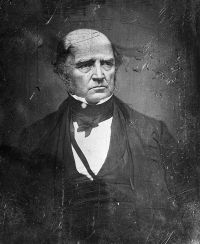
Summary

Portrait of Levi Woodbury Levi Woodbury Maxwell v. Griswold — Opinion of the Court

We have already decided, that the demand for such an increased appraisal was illegal. The appraisal itself, as made, was illegal. The raising of the invoice was thus caused by these illegalities in order to escape a greater burden in the penalty. The payment of the increased duties thus caused was wrongfully imposed on the importer, and was submitted to merely as a choice of evils.
Source: Wikisource

Portrait of Levi Woodbury Levi Woodbury Maxwell v. Griswold — Opinion of the Court

The power given to the Secretary of the Treasury, under §§ 23, 24 of the tariff act of 1842, to establish 'regulations not inconsistent with the laws of the United States,' to secure just and impartial appraisals of goods, is a special and very guarded power, and is but a repetition of former similar provisions. Act of 1832, c. 227, § 9 (4 Stat. at L., 592) .
The collector who exacts duties under instructions inconsistent with the law, cannot plead in defence an act of a superior, which in itself is null and void.
Source: Wikisource

Portrait of Levi Woodbury Levi Woodbury Maxwell v. Griswold — Opinion of the Court

By an appraisement as of the time of shipment, no other future steps can remedy the illegality, and the provisions of § 17 of the tariff act of 1842 (5 Stat. at L., 574) do not make any appraisement final and conclusive, unless the merchant neglects or refuses to furnish proof or answer interrogatories, or unless the collector having by writing notice of the dissatisfaction of the importer, has a merchant appraisement conformably to law.
Source: Wikisource

Get perspective with Kwize: daily news enlightened by great literature