Summary

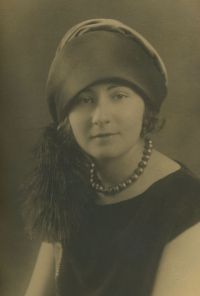
Portrait of Lillian Eichler Lillian Eichler Book of Etiquette, Volume 2, Part 4… (1921)

Or to be more explicit, is conversation an art or a gift? The answer must certainly be an art, for nature never gives that which study accomplishes. And by study you can become a master of speech—you can make words a veritable torch, illuminating you and your surroundings. But words alone mean very little. It is the grouping of words, expressions, phrases; the combination of thoughts that make real conversation.
Source: Wikisource

Portrait of Lillian Eichler Lillian Eichler Book of Etiquette, Volume 2, Part 4… (1921)

As long as it is something with a touch of human interest in it, and if you tell it with the desire to please rather than impress, your audience will be interested in your conversation. But to remain quiet, answering only when you are spoken to, and allowing conversation to die each time it reaches you, is a feature of conduct belonging only to the ignorant and dull. There are many pleasant and agreeable things to talk about—argument and discussion have no place in the social drawing-room—and there is no reason why you cannot find them and make use of them.
Source: Wikisource

Portrait of Lillian Eichler Lillian Eichler Book of Etiquette, Volume 2, Part 4… (1921)

Try to be naturally courteous and cordial in your speech. It is a mistake to "wear your feelings on your sleeve" and resent everything that everyone else says that does not please you. To become quickly excited, to speak harshly and sarcastically is to sacrifice one's dignity and ease of manner. Know what you want to say, be sure you understand it, and when you say it, be open for criticisms or suggestions from those around you. Do not become flustered and excited merely because someone else does not agree with you.
Source: Wikisource

Get perspective with Kwize: daily news enlightened by great literature