Summary

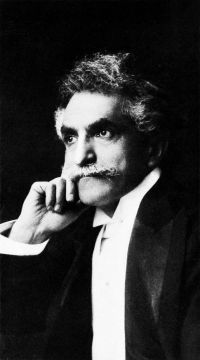
Portrait of M. M. Mangasarian M. M. Mangasarian The Story of Joan of Arc the Witch-Saint

By the help of the moon and the stars of that night in May, fourteen hundred thirty-one, I traced my way to the imposing Cathedral of St. Ouen, standing like a towering shadow in the cold light of the night, and close to which lived the Bishop of Beauvais.
I knocked upon the Bishop's door. "Open, open," I cried, as in the dead of night I kept pounding upon the door. "I wish to come in," I cried. "I wish to save the Church from an indelible stain, I wish to protect the honor of humanity."
Source: Gutenberg

Portrait of M. M. Mangasarian M. M. Mangasarian The Story of Joan of Arc the Witch-Saint

If she should repent of a single act ever committed by her officially, she would lose her claim to infallibility—for how can the infallible err? If, on the other hand, she should hold to her infallibility, how can she be sorry for anything she has ever done? If I had any influence with the Catholics I would advise them to sacrifice infallibility for the respect of humanity. It is much more divine to say, "I am sorry," than to say, "I am infallible." But the Catholic Church will not take my advice.
The shrine of Joan in the Paris church is almost as eloquent as her stake in Rouen.
Source: Gutenberg

Portrait of M. M. Mangasarian M. M. Mangasarian The Story of Joan of Arc the Witch-Saint

It is no wonder that a superstitious man like Charles VII, in a superstitious age, trembled, not only for his crown, but, also, for his life. Therefore, in order to make his succession legitimate it was necessary to prove that Joan was not a witch, but a true messenger of God. For if Joan was a witch, Charles VII was not king "by the grace of God," but by a trick of the devil.
Source: Gutenberg

Get perspective with Kwize: daily news enlightened by great literature